
Kidney Stone Surgery
Suction Access Sheaths for Kidney Stone Surgery
Flexible Active Suction Sheaths (FANSs) are transforming ureteroscopy by improving visibility, reducing pressure, and clearing stone debris in real time. This post explains how they work and why they matter.
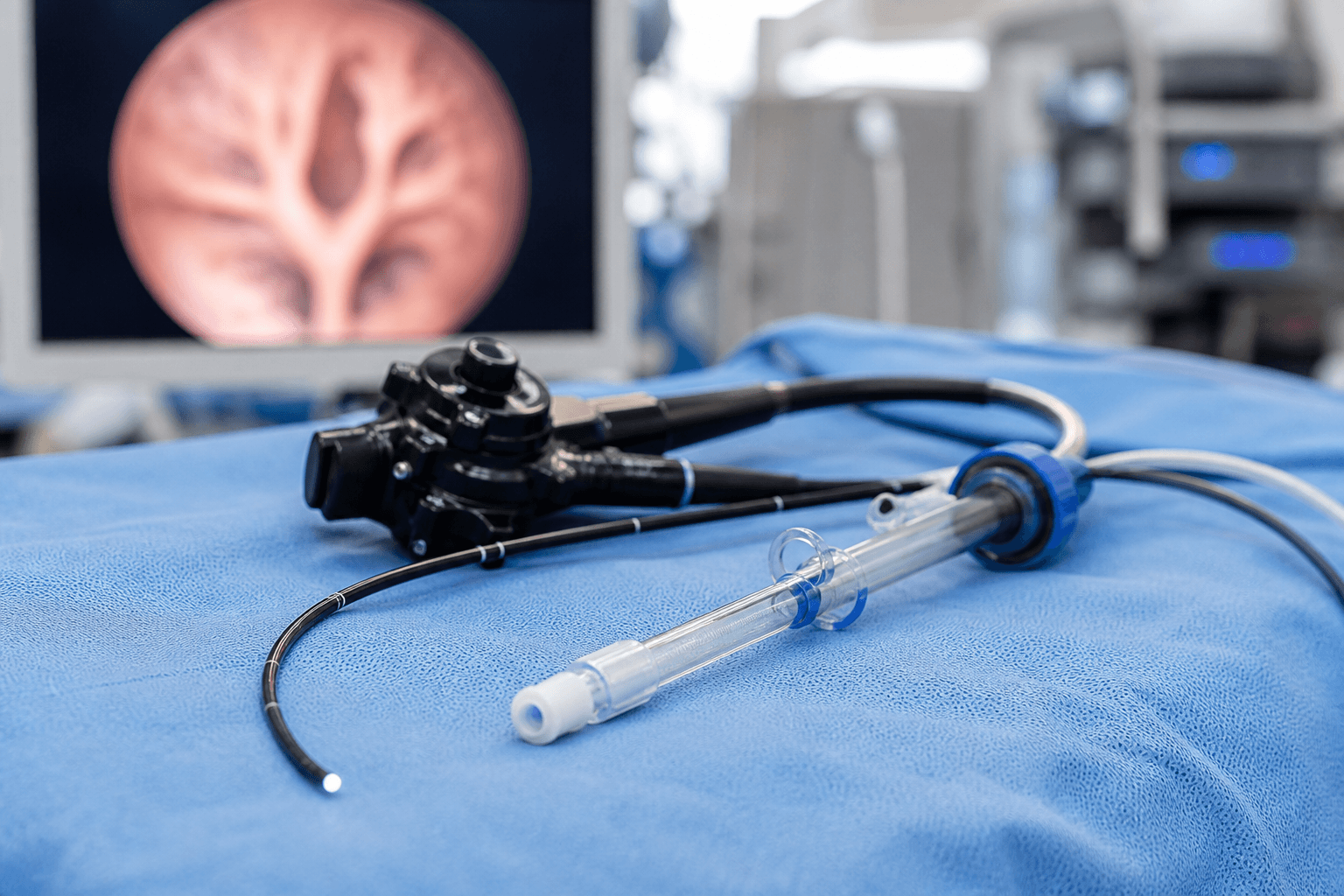
The Problem with Traditional Ureteral Access Sheaths
Conventional ureteral access sheaths are rigid. While they help surgeons guide a ureteroscope into the kidney, their inflexibility creates a real challenge: the kidney's internal anatomy is anything but straight. Tight angles around the ureteropelvic junction and access to difficult calyces, particularly the lower pole, have been persistent obstacles.
Rigid sheaths also cannot apply suction at the point of laser lithotripsy, meaning stone dust, debris, and fragments accumulate inside the kidney during treatment. This raises intrarenal pressure, reduces visibility, and slows down the procedure.
What Are FANSs and How Do They Work?
Flexible Active Suction Sheaths (FANSs), sometimes called kidney hoovering devices, represent the next generation of ureteral access technology. Unlike rigid predecessors, FANSs are designed to:
The result is a cleaner operative field, safer pressure levels within the kidney, and more efficient stone clearance, all without increasing the invasiveness of the procedure.
Expanding the Reach of Ureteroscopy
Before active suction sheaths, the accepted guideline was to use percutaneous nephrolithotomy for stones larger than 2 cm. The rationale was sound: larger stones, when broken up ureteroscopically without suction, risked causing steinstrasse, where fragments block the ureter as they pass.
Active suction changes this calculus. By continuously evacuating fragments during laser lithotripsy, FANSs reduce the steinstrasse risk and make it safer to treat larger stones ureteroscopically. Surgeons can now fragment and remove stones in real time, not just blast them and hope for the best.
Clinical Evidence: FANSs vs. Mini-PCNL
A recent international randomised controlled trial compared flexible ureteroscopy with FANSs against mini-PCNL for the treatment of 2 to 3 cm renal stones. The results were striking:
Why This Matters for Patients
Looking Ahead
The development of FANSs is part of a broader trend in urology towards smarter, less invasive instrumentation. As laser technology, digital miniaturised ureteroscopes, and suction sheaths continue to evolve, the boundary of what can be achieved endoscopically keeps moving.
It is not unreasonable to expect that in the near future, a significant proportion of kidney stones currently treated with PCNL will instead be managed entirely through the ureteroscope, with FANSs playing a central role in making that possible.
Conclusion
Flexible Active Suction Sheaths represent one of the most exciting recent advances in kidney stone surgery. By combining flexibility, precision, and active clearance, FANSs are enabling surgeons to safely treat larger, more complex stones ureteroscopically with outcomes that rival percutaneous surgery and far less impact on the patient.
If you or a patient is facing management of a kidney stone, particularly one over 1.5 cm, it is worth asking your urologist whether ureteroscopy with a FANS device may be the right approach.
Written for urologists, trainees, and informed patients. Always discuss treatment options with a qualified urological specialist.